
 Functional
 Water
 Snap your plate
 Excuse games
 Mind, Body & Beyond
 Store
 Community












































































Sleep
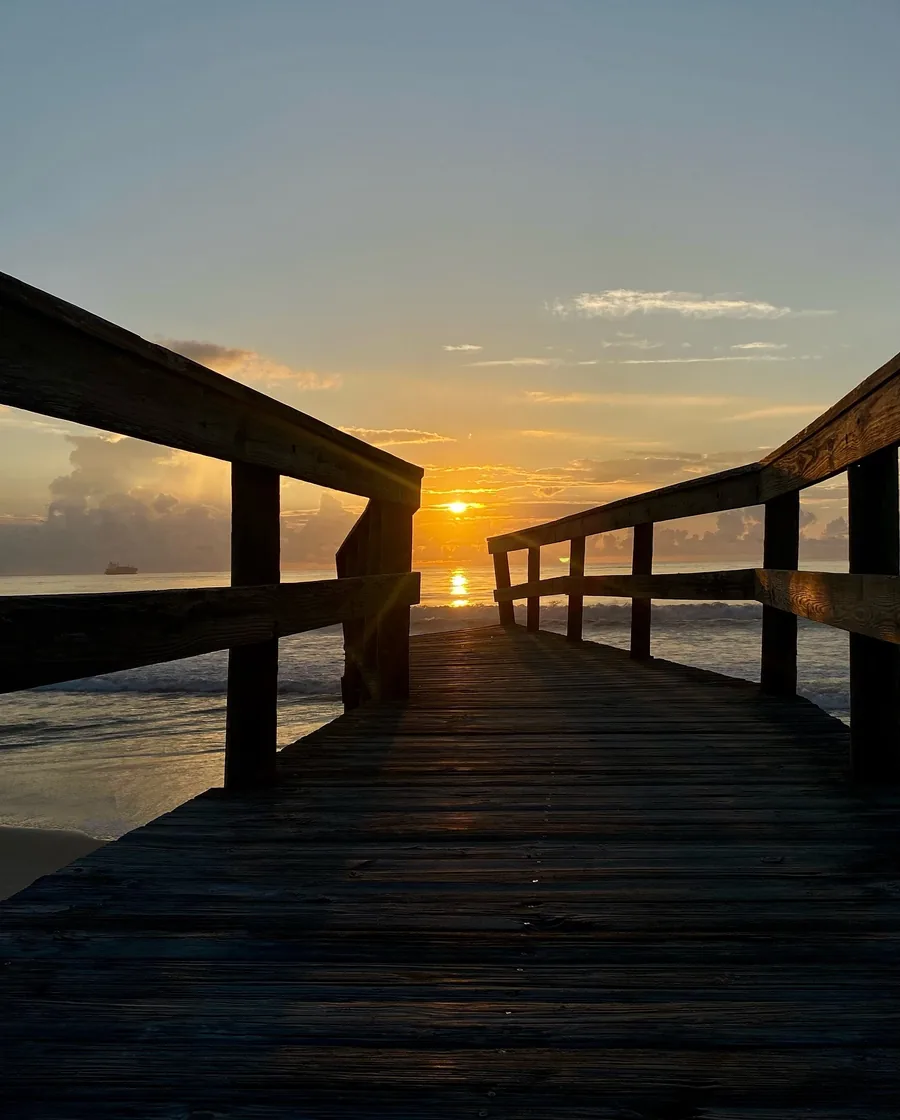
Get morning sunlight when you wake up
Your body runs on an internal clock of about 24 hours, and light is the main signal that sets it. Getting outside in the morning is one of the simplest, cheapest habits that has real science behind it. It isn't a cure-all, and the details matter.
Why light sets the clock
A review by researchers at the University of Basel explains that light is the strongest cue for human circadian rhythms, and that it affects sleep and mood both through the clock and directly. The Sleep Foundation describes the daily loop: in the morning, light helps stop melatonin and raise body temperature so you feel awake. In the evening, darkness lets melatonin rise again.
Timing matters. Lab studies at Harvard's Brigham and Women's Hospital mapped how the clock responds to light at different times. Even one hour of bright light could shift the clock, and the direction depended on when it happened. Light in the biological morning tends to move the clock earlier. Light late at night tends to push it later.
What happens in real life
In a well-known study from the University of Colorado, people went camping with only natural light. Their internal clocks shifted earlier and lined up with sunrise and sunset. Compared with their normal lives under electric light, they got more daylight and less light after dark. Night owls shifted the most.
More recent field data point the same way. A diary study of 103 U.S. adults over up to 70 days found that morning sunlight predicted better sleep quality the next night, while total time in the sun mostly didn't. A 2025 cross-sectional study of 1,762 adults in Brazil found that every extra 30 minutes of sun before 10 a.m. was associated with a sleep midpoint about 23 minutes earlier and slightly better sleep-quality scores. There was no link to total sleep time.
What the evidence doesn't say
- “The first 10 minutes after waking” isn't a proven rule. The research supports morning light. We didn't find evidence that you must be outside within minutes of opening your eyes.
- The field studies are mostly observational. People who get morning sun may also keep regular schedules, walk more or have less stressful mornings.
- It doesn't make you sleep longer. In the Brazil study, morning sun was tied to timing and quality, not total sleep time.
- Not everyone needs an earlier clock. Shift workers and people with circadian rhythm disorders may need a different plan. The Sleep Foundation suggests they talk to a doctor.
A simple morning routine
- Get outside early. Coffee on the porch, a short walk, the commute on foot. The Sleep Foundation suggests at least 30 minutes of daylight a day, ideally early.
- Cloudy still counts. Outdoor light on an overcast day is still far brighter than most indoor lighting. If you can't get out, open the curtains and sit near a window.
- Never stare at the sun. Just be outside, eyes open, looking around normally.
- Pair it with the other end of the day. Bright mornings work best with dimmer evenings. The Sleep Foundation's light and sleep guide covers keeping evening light low.
- Keep a steady wake time. Morning light works best when it arrives at about the same time each day.
Ongoing insomnia or daytime sleepiness deserves a conversation with a doctor or sleep specialist.
Why the morning, specifically?
The Harvard phase-response research shows that the same light can move your clock in different directions depending on when it arrives. Morning light tends to move it earlier, so you get sleepy earlier at night and wake up more easily. Bright light late in the evening does the opposite. That's why the habit pairs a bright morning with a dim evening. They push in the same direction.
The camping study shows how far modern life drifts from this. Indoors, we get much less light during the day than outdoors, and more light after sunset. The result is a later body clock, which is hard on anyone who has to be up early for work, school or a morning session.
Common questions
Does light through a window work?
It helps, and the Sleep Foundation suggests letting natural light in through the windows. Going outside gives you more light, so step out when you can.
What about light boxes?
Light therapy devices are used clinically for some sleep and mood conditions. Choosing and timing them is best done with a doctor, especially if you have an eye condition or bipolar disorder. For most healthy people, daylight is free and enough to start with.
How fast will I notice a difference?
Studies vary and none we cite gives a guaranteed timeline. Give it two weeks of consistent mornings, a steady wake time and dimmer evenings, then check how quickly you fall asleep and how you feel when you wake.
The bottom line
Morning light is one of the best-supported, lowest-cost sleep habits there is. It mainly helps your sleep happen at the right time. Pair it with a regular wake time and dim evenings, and don't worry about a stopwatch.
Want to see your own patterns? Log it in the free Tracker.
Start your day in the TrackerThis article is for general information and isn't medical advice. Talk to a qualified health professional about your own situation.
Sources
- Blume et al. 2019, Somnologie: effects of light on circadian rhythms, sleep and mood
- Wright et al. 2013, Current Biology: entrainment to the natural light-dark cycle
- St Hilaire et al. 2012, J Physiol: phase response curve to 1 h of bright light
- Anderson et al. 2025, J Health Psychol: sunlight and next-night sleep, diary study
- BMC Public Health 2025: sunlight timing and sleep regulation
- Sleep Foundation: What is circadian rhythm?
- Sleep Foundation: Healthy sleep habits
- Sleep Foundation: Light and sleep